STEM Student Success Stories
FOUAD KARDOUS
A PATH FROM BIOMANUFACTURING TO TRANSPLANT SCIENCE
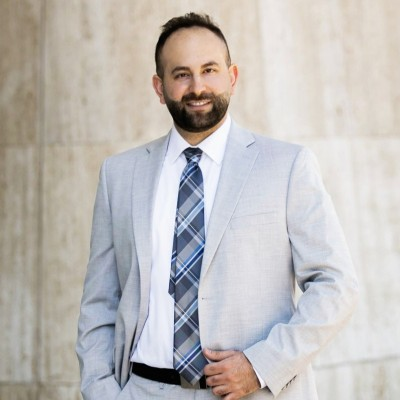
When Fouad Kardous completed the Citrus College Biotechnology program in June 2020, he left with a Certificate in Biomanufacturing and training he could apply directly in laboratory and pharmaceutical settings.
That preparation helped launch a career that has continued to grow.
After graduating, Kardous worked as a manufacturing technician at Gilead Sciences during the COVID-19 pandemic. He later joined Bimeda as a laboratory assistant, where he learned new techniques and eventually earned a promotion to quality control analyst.
His professional development has continued. Kardous is now taking a training course at Eurofins as he works toward becoming a licensed clinical histocompatibility scientist in a kidney transplant laboratory.
As his career has progressed, Kardous has taken on a range of technical responsibilities. His work has included calibrating and logging pH and conductivity meters, preparing buffers and reagents and performing tests according to standard operating procedures. He also reports test results using Good Documentation Practices and submits them to Quality Assurance for review.
For Kardous, working in the lab provides an opportunity to strengthen both his technical and analytical abilities. "I enjoy working in the lab immensely because it fosters my ability to think critically and use my problem-solving skills," he said.
The environment also allows him to gain hands-on experience with different techniques, equipment and materials while balancing independent work with collaboration. "To top it off, the lab is incredibly rewarding and stimulating, motivating me to return to work each day with renewed enthusiasm," he said.
Kardous credits the Citrus College Biotechnology program with helping him develop the foundational skills required for laboratory and pharmaceutical work. "This biotech program at Citrus College gave me the essential knowledge and skills necessary to be successful in a laboratory or pharmaceutical setting," he said.
Among the skills he learned were preparing buffers, pipetting and creating serial dilutions — techniques he later applied on a daily basis at work.
The program also introduced Kardous to good manufacturing and documentation practices, knowledge he considered particularly valuable as he entered the workforce. "This was invaluable for me in the job market and gave me an advantage over other applicants," he said.
According to Kardous, the program's emphasis on recreating a pharmaceutical workplace environment also helped prepare him for what he would encounter professionally. "The program was designed to replicate a real pharmaceutical company environment, so I felt confident and well-prepared when I graduated," he said.
He also credits the program with providing connections to local pharmaceutical companies that helped him secure his first job.
From manufacturing technician to laboratory assistant and quality control analyst, Kardous has continued building upon the skills he developed at Citrus College. His current training toward becoming a licensed clinical histocompatibility scientist represents the next step in that progression.
For more information about the Citrus College Biotechnology program, contact Dr. Eleanor Tsark at etsark@citruscollege.edu.
ORIGINALLY SHARED
FRIDAY, MARCH 3, 2023
CITRUS COLLEGE SOCIAL MEDIA