Adapted PE and Fitness Center
The Fitness Center provides fitness opportunities for students, employees and community members within the college district.
LOCATION
The center is located in the Adapted Physical Education Building (AP 109) on the east side of campus next to the tennis courts and north of the Aquatics Center.
The nearest parking lot is accessible from Barranca Avenue, just south of Foothill
Boulevard. For those with a valid disabled placard, accessible parking is available
in front of the Adapted Physical Education Building.
SPRING 2026 OFFICE HOURS (PE 112)
Feb 17 – Jun 12, 2026
Mon–Thur 8 a.m. to 5 p.m.
Fri 8 a.m. to 4:30 p.m.
CAMPUS CLOSURE DATES
Feb 13, Feb 16 Presidents Day
Mar 31 Farmworkers Day
May 25 Memorial Day
FOLLOW KINESIOLOGY AND ADAPTED PHYSICAL EDUCATION ON INSTAGRAM
FITNESS CENTER ACCESS INFORMATION
Access Transportation Services
Drop-off and pick-up for persons with a disability, the passenger zone for the Adapted
Physical Education Center (AP) is located near to the AP Building and the Gymnasium
(PE).
Glendora Dial-A-Ride
Dial-A-Ride enters campus through the Barranca Avenue driveway. Drop-off and pick-up
are located in parking lot S8, next to the Diesel Technology (DT2) Building and near
the Technology Engineering (TE) and Portable 3 (P3) buildings.
For your convenience, you may view a 2D and 3D campus map online or review the maps and directions web page.
CREDIT COURSE INFORMATION: KIN 148, KIN 150, KIN 159
Physician's written diagnosis of physical disability and exercise limitations.
Disability Verification/Medical Release Form
- If you are a new student, have your doctor complete the disability verification/medical release form and bring it to the first class session.
- If you are returning from a change in your medical condition, be certain to have your doctor list any limitations or recommendations and check the box "Permission to return to exercise program" box.
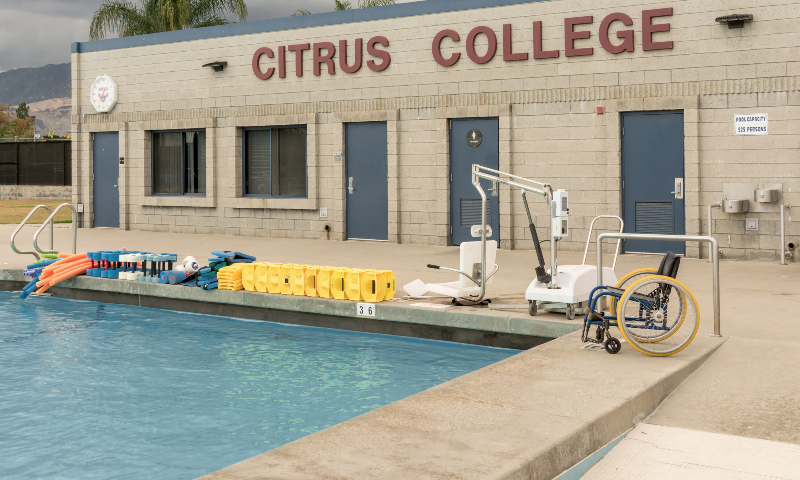
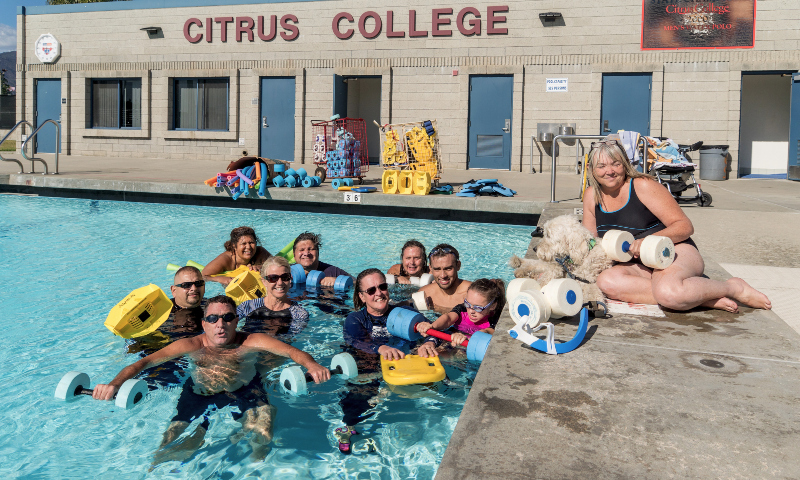
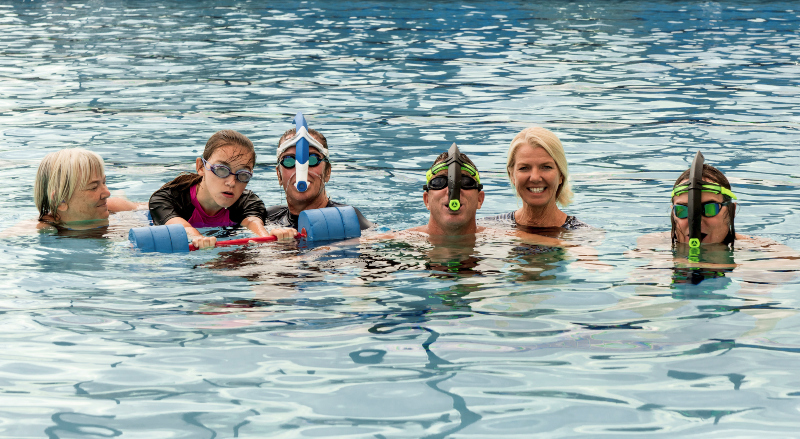
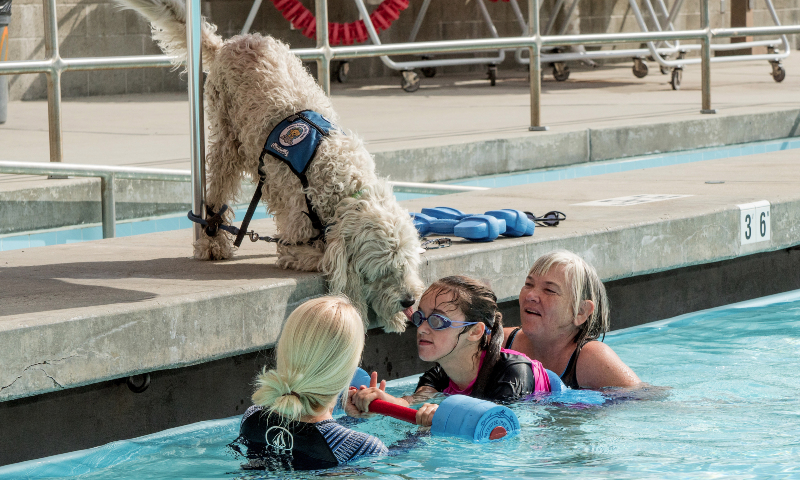
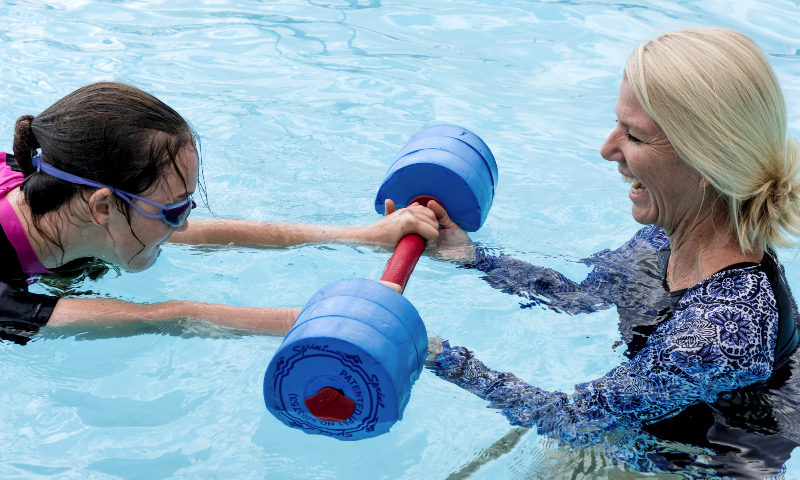
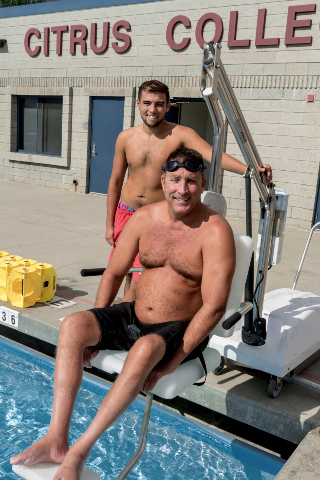
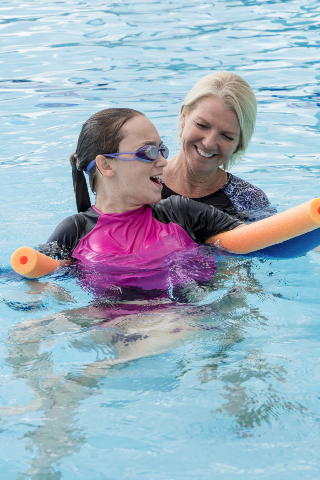
KIN 148 ADAPTED AQUATICS
This adapted physical education course is designed for students with disabilities who are unable to participate in traditional physical education classes. A physician's prescription outlining exercise limitations is required for enrollment.
The course combines 18 lecture hours and 18 lab hours, providing both theoretical instruction and hands-on practice. Students focus on improving endurance, strength and flexibility through water-based exercises adapted to their individual needs.
Course objectives emphasize three key outcomes:
- improving physical fitness within the limits of each student's disability,
- independently analyzing the impact of those disabilities on fitness and
- developing practical solutions to overcome physical limitations in water environments.
Students gain skills that help them maximize physical function and independence in aquatic settings.
Major topics include orientation and safety procedures, transfer techniques and understanding the benefits of regular exercise. Instruction covers body composition, cardiovascular health, flexibility, muscular strength and endurance, balance and coordination and recreational activities such as swimming, aqua aerobics and jogging. Students also learn adapted swimming strokes, gait training and motor skill development. Participation in Special Olympics events — as athletes, spectators or aides — is included as part of the program's community-focused component.
The lab portion offers practical experience in all aspects of fitness training. Flexibility exercises target both upper and lower body mobility, while aquatic activities such as swimming, aqua jogging and water cycling build cardiovascular endurance. Strength and endurance training includes movements for major muscle groups — such as curls, extensions, lunges and shoulder work — adapted to the student's abilities. Balance and gait exercises help improve walking patterns and overall coordination.
In addition to lectures and lab work, students complete assignments that integrate classroom learning with personal health goals. Examples include preparing a weekly diet log to analyze caloric intake and expenditure and designing individualized workout programs that incorporate strength, flexibility and cardiovascular activities.
Instruction is delivered through a combination of lecture and lab formats, supported by instructor handouts and personalized education plans.
If you'd like more information about our specialized water classes, please call (626) 914-8685 or email Cheri Swatek at cswatek@citruscollege.edu.
KIN 150 ADAPTED PHYSICAL EDUCATION
This adapted physical education course is designed for students with disabilities who cannot safely participate in standard physical education classes. Enrollment requires a medical doctor's written prescription outlining exercise limitations.
The course consists of 54 lab hours focused on safe, supervised physical activity. Students are encouraged to improve endurance, strength and flexibility within their individual capabilities, while also developing the ability to analyze how their disability impacts their physical fitness. In addition, the course emphasizes problem-solving strategies for overcoming physical limitations and fosters awareness of diverse cultures and disabilities.
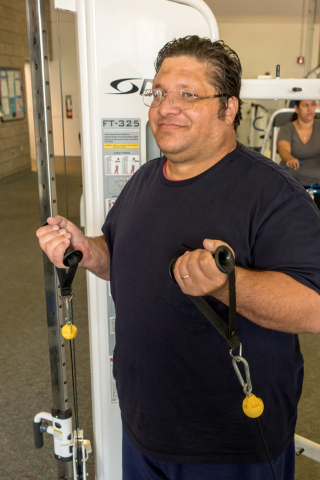
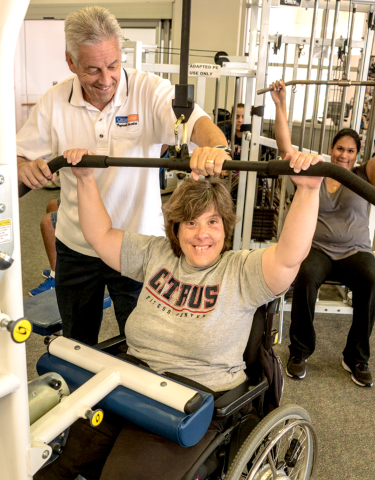
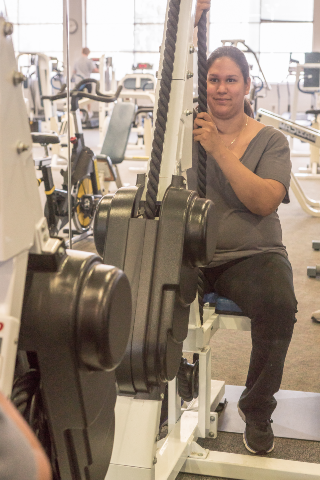
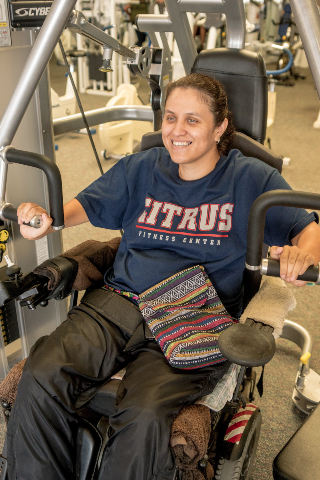
The lab-based curriculum covers orientation and safety, proper lifting and stretching techniques and a variety of endurance, strength and flexibility activities. Students use equipment such as stationary bicycles, treadmills, elliptical trainers, arm ergometers, hand weights, resistance bands, wall pulleys and weight machines. Flexibility is developed through passive and active range of motion exercises, as well as specialized tools like flexacisers and chord machines. Balance and coordination are strengthened through targeted drills, including catching and throwing activities and balance board exercises.
Recreational and group activities are also incorporated, including volleyball, badminton and bocce ball, to promote teamwork, enjoyment and social engagement. Students are further encouraged to participate in or observe events such as the Special Olympics, where they may serve as participants, aides or spectators.
Coursework also includes education about major health risk factors — such as hypertension, obesity, smoking, high cholesterol, diabetes and stress — and their connection to physical activity and overall wellness.
Additional topics include training intensity, nutrition and injury prevention. Students learn to monitor training heart rates, use perceived exertion scales and apply the "talk test" to ensure safe and effective workouts. Nutrition considerations address conditions such as hypertension, heart disease, obesity and diabetes. Preventative strategies for common exercise-related injuries — such as heat-related issues, muscle strains, sprains, inflammations and contusions — are also covered to promote safe participation in fitness activities.
Assignments encourage students to set and pursue personal fitness goals, practice exercises at home and engage in outside learning opportunities. For example, students develop at least three individualized fitness goals based on their initial fitness assessments, read instructor-provided handouts relevant to their disability and participate in community events related to adaptive physical activity.
Instruction is delivered primarily through lab-based experiences, with some components offered in an online education lab format.
If you wish to enroll in KIN 150 Adapted Physical Education more than once, you must complete a Course Repetition Petition.
If you'd like more information about our specialized kinesiology classes, please call (626) 914-8685 or email Cheri Swatek at cswatek@citruscollege.edu.
KIN 159 CARDIOVASCULAR CIRCUIT TRAINING
This course emphasizes full-body conditioning workouts that combine resistance training with high-intensity aerobic exercise. Students engage in circuit-style training designed to elevate heart rate, build muscular strength and improve overall cardiovascular fitness. Workouts may include the use of weight machines, stationary bicycles, treadmills, elliptical machines and other fitness equipment. The course includes 18 lecture hours and 18 lab hours, blending theory with hands-on practice.
By the end of the course, students are expected to demonstrate proper use of a variety of fitness machines and tools, understand the principles of cardiovascular exercise programming and apply knowledge of training heart rate to develop safe and effective fitness routines. Additionally, students will evaluate their progress in key fitness components, including muscular strength, muscular endurance, flexibility, cardiovascular endurance and body composition.
Instruction begins with orientation topics such as safety, lifting techniques and circuit training procedures. Students then explore the core components of fitness — strength, endurance, flexibility and cardiovascular capacity. Physiological aspects, such as heart rate, respiration, hydration and body composition, are studied to help students understand how the body adapts to exercise. The course culminates in the development of individualized fitness plans.
The lab portion provides extensive hands-on experience with endurance, strength and flexibility activities. Students rotate through endurance training on treadmills, bicycles and stair climbers; strength-building exercises using weight machines and calisthenics; and flexibility training with both static and active stretching methods. Lab activities also include monitoring exercise intensity through heart rate, respiration and periodic fitness assessments to track improvements.
Assignments complement lab and lecture activities, requiring students to apply concepts to their personal fitness journeys. Examples include keeping daily logs of weight resistance changes, writing reflection papers on physical adaptations throughout the semester and tracking diet and nutrition patterns. These assignments help reinforce an understanding of the relationship between exercise, nutrition and health-related fitness outcomes.
Course outcomes emphasize measurable gains in muscular strength, endurance, flexibility and cardiovascular fitness, while providing students with tools to sustain long-term wellness.
Instruction is delivered in multiple formats, including lecture, lab and online education components, offering students both flexibility and practical engagement.
If you would like to make a tax-deductible donation to the adapted physical education program or the Dale C. Baird Scholarship Fund, contact the Citrus College Foundation.